Take My DP-700 Exam: Fabric Data Engineering Help When Time Is Short
Typing take my DP-700 examinto a search bar usually isn't idle curiosity. Maybe your employer wants the Microsoft Fabric data engineer certification on your profile by the end of the quarter. Maybe a client just standardized on Fabric and you're the person expected to know it. Either way, the DP-700 can feel like a lot, and honestly, that's fair. It's the newest exam in the Fabric lineup, and it asks you to think like an engineer, not a report builder.
Here's the thing about data engineering on Microsoft Fabric: nothing lives in isolation. You ingest with a pipeline, land the data in a lakehouse, clean it in a notebook, serve it through a warehouse, stream events in real time, and then keep an eye on the whole thing so it doesn't fall over at 2 a.m. The exam tests all of it in one sitting. Our Microsoft Fabric Data Engineer exam help is built for people who know a good chunk of that stack but can't spare the weeks it takes to fill every gap.
If you've already tackled the analytics side, you might recognize the pattern from our DP-600 Fabric Analytics Engineer exam help. DP-700 is its engineering-focused sibling, and the two together make a very credible Fabric story.
Microsoft Fabric Data Engineer Associate Exam DP 700 at a Glance
The official title is Implementing Data Engineering Solutions Using Microsoft Fabric. Pass it and you earn the Microsoft Certified: Fabric Data Engineer Associate credential. People call it by a dozen names: the Microsoft data fabric exam, the Fabric data engineering certification, the Microsoft Fabric data engineer exam DP 700. It's all the same test. Microsoft updates its role-based exams from time to time, so check the live study guide before you book. The core numbers below have been steady, though.
Exam code
DP-700
Credential
Microsoft Certified: Fabric Data Engineer Associate
Typical price
US $165; varies by country or region
Duration
About 100 minutes of exam time
Question count
Usually 40 to 60; the final count shows at exam start
Passing score
700 out of 1,000
Recommended background
Data engineering, SQL, PySpark, KQL, and hands-on Fabric
Delivery
Pearson VUE test center or online proctoring, where offered
Question styles vary. You'll likely see multiple choice, multiple response, drag-and-drop, and scenario-based items, plus the occasional case study. Don't obsess over the exact number you read on a forum. Anyone searching for Microsoft Fabric data engineer exam questions will find plenty of speculation, and most of it is stale. The introduction screen is the only source that counts on the day.
Cost is the other thing people ask about. Is it expensive? Not compared with a boot camp, but the price of the Microsoft Fabric test exam changes by region, and vouchers or promotions can shift it. Even the broader Microsoft data science certification cost question has the same answer: check the scheduling page for your country.
What the Fabric Data Engineer Certification Actually Covers
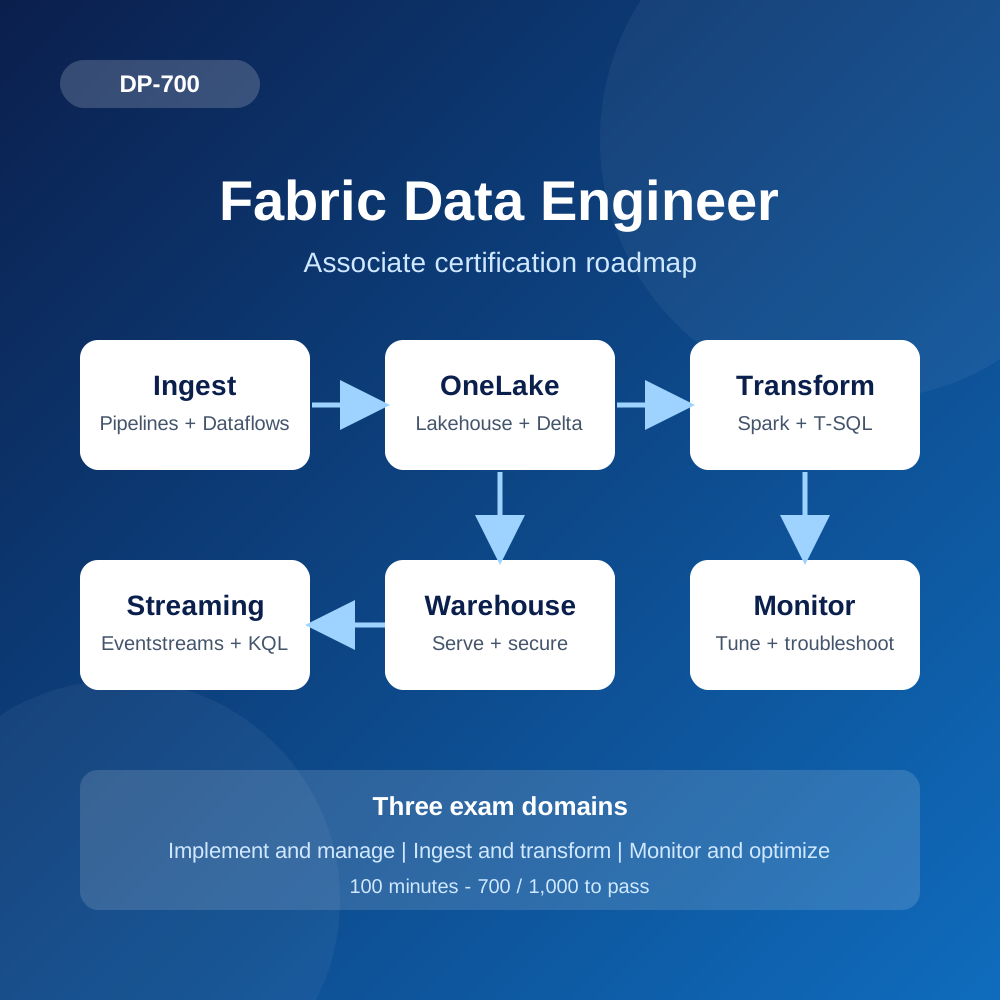
The current objectives sit in three domains, each weighted at roughly 30 to 35 percent. That near-even split matters. You can't coast on one strength and hope for the best.
Implement and manage an analytics solution. This one covers workspace settings, Spark and domain configuration, OneLake, lifecycle management with Git and deployment pipelines, security and governance, and orchestration. It sounds administrative, and sort of is, but a question about workspace roles, item-level permissions, or dynamic data masking can easily sink an otherwise confident candidate.
Ingest and transform data.Here's where most hands-on engineers feel at home. You'll choose between Dataflows Gen2, pipelines, notebooks, and T-SQL for loading and shaping data. Expect full versus incremental loads, slowly changing dimensions, Delta tables, partitioning, streaming with eventstreams and Spark Structured Streaming, and KQL for real-time analysis. Knowing the tool isn't enough. The exam wants to know why you picked it.
Monitor and optimize an analytics solution. Think Monitoring Hub, refresh and pipeline failures, notebook and Spark errors, query performance, and capacity behavior. It's the domain people underestimate, probably because monitoring rarely feels glamorous. And yet a slow lakehouse table or a failed copy activity is exactly the kind of scenario that shows up in real jobs.
Why Fabric Data Engineering Experience Is Hard to Fake
Microsoft Fabric is relatively young, and it went generally available (GA Microsoft Fabric, if you've seen that phrase in search results) only recently compared with older Azure services. That means fewer polished study books, patchier third-party material, and a lot of tutorials that describe preview behavior that has since changed. Anyone hunting for a solid Microsoft Fabric data engineering tutorial knows the frustration.
Then there's the experience gap. Plenty of strong data engineers have spent years in Synapse, Databricks, or plain Azure Data Factory, and they're now asked to prove Fabric data engineering experience they haven't had time to accumulate. Others come from the Power BI world and have to learn Spark, Delta, and PySpark from scratch. A few arrive from application development, where a question like "can I use C# in Microsoft Fabric?" is perfectly natural (short answer: notebooks lean on PySpark, Scala, R, and SQL, so you'll mostly work outside C# for core engineering tasks).
Communities help a bit. You'll find threads on Microsoft Fabric data engineering Reddit boards, long discussions about the Microsoft Fabric exam on Reddit, and plenty of questions on the wider Fabric Microsoft Reddit communities. They're useful for morale and for spotting trends. They're less useful for deciding what to do about a deadline that's three weeks away. That's where people start looking for expert support instead of another tab of advice.
Questions About Microsoft Fabric That Candidates Keep Asking
Before anyone books an exam, a few foundational questions about Microsoft Fabric tend to come up. Let's run through them quickly.
Is Microsoft Fabric a database?Not exactly. It includes database-style items, like a warehouse and a SQL analytics endpoint, but that's only part of the picture. Is Microsoft Fabric a data platform? Yes, and a unified one: a software-as-a-service environment that brings data integration, engineering, warehousing, real-time analytics, and business intelligence together over OneLake. Is Microsoft Fabric ETL?It does ETL and ELT, through pipelines, Dataflows Gen2, and notebooks, but calling it "just an ETL tool" undersells it considerably.
Is Microsoft Fabric useful?For organizations already invested in Microsoft, usually yes. A single storage layer, shared security, and tight Power BI integration reduce a lot of plumbing. That usefulness is exactly why Fabric credentials have become a hiring signal. If you've ever wondered whether a Microsoft Fabric exam is worth the effort, look at job posts. They mention Fabric more every month.
Microsoft Data Engineering Jobs, Salary, and Your Resume
Let's talk money, because that's often the real motivation. How much does a data engineer make? It varies by region, seniority, and industry, but the plan we work from puts Fabric data engineers in the $115,000 to $165,000 range. The Microsoft data engineer salary conversation gets more interesting at senior levels, where architecture and cost control skills carry a premium.
Microsoft data engineering jobs, whether at Microsoft itself, a partner, or a client, tend to ask for a blend of SQL, Python, pipeline design, and cloud awareness. A line on your Azure Fabric data engineer resume that reads "Microsoft Certified: Fabric Data Engineer Associate" gets you past plenty of keyword filters. It doesn't replace experience. It makes your experience easier to believe. (Side note: curious people sometimes wander into related questions, like whether Microsoft hires data scientists or what Microsoft data scientist levels look like. Those are different tracks, and our Azure Data Scientist exam assistance page is a better fit if that's your direction.)
Which data engineer certification is best? Honestly, it depends on your stack. If your organization runs on Microsoft, a Fabric data engineer credential makes a lot of sense. If you live in Spark, the Databricks Data Engineer exam help route might fit better, and AWS shops often prefer the AWS Data Engineer Associate exam support track. Google Cloud teams, meanwhile, lean toward the Google Professional Data Engineer assistance path.
A Practical DP-700 Readiness Framework
Start by mapping what you do every day against the three domains. Be candid about it. If you build pipelines weekly but never touch KQL, write that down. If you're great at PySpark but fuzzy on workspace security, write that down too. There's no prize for pretending every topic feels equally familiar.
Next, practice turning business statements into design choices. "Orders arrive continuously" points toward eventstreams and real-time intelligence, not a nightly batch. "Analysts need SQL access to curated data" suggests a warehouse or a lakehouse SQL endpoint. "Minimize duplication" should make you think of shortcuts and OneLake. Small phrases, big consequences. The exam is full of them.
Then keep the lifecycle in one mental picture: ingest, transform, store, secure, serve, monitor. It won't answer every question, but it stops Fabric from feeling like a heap of features. Candidates who like a fast review sometimes search for a Microsoft Fabric exam cram guide, and a tight checklist built around that lifecycle is a reasonable stand-in, as long as you understand the reasoning behind each answer.
Already passed the analytics-side test? Reviewing Microsoft Fabric Analytics Engineer: get ready for exam DP-600 material, and even Microsoft Certified Fabric Analytics Engineer Associate exam questions, can reinforce the shared foundations like OneLake, workspaces, and Delta. Plenty of people study the Microsoft Fabric analytics engineer exam and DP-700 back to back for that reason. Candidates whose work leans toward reporting may want our Power BI Data Analyst certification support alongside this.
Why People Ask Someone to Take Their DP-700 Exam
Let's be real about the reasons. Nobody searches take my DP-700 exambecause they're lazy. They search it because the calendar is brutal. A migration is running late. A promotion review is two months out. A consulting partner needs a certified Fabric engineer on the roster before it can bid. Sometimes it's simply that three years of experience on other platforms doesn't translate neatly to a brand-new exam format, and re-learning everything feels impossible while you're also shipping real work.
That's the moment professionals start comparing options. Some pick a tutor. Some buy a practice bundle and hope for the best. Others decide that having an experienced specialist handle the exam is the most sensible use of limited hours. We won't pretend the third route is right for everyone, and it's a decision you should make with your eyes open. What we can promise is a straight conversation, a clear timeline, and a team that actually understands Fabric.
Think of it as paying for expertise you don't have time to build right now. When you pay someone to take your DP-700 exam, you're buying familiarity with Fabric's trickier corners: when to pick a notebook over a Dataflow Gen2, how OneLake shortcuts avoid copying data, or why a particular Delta maintenance command matters for query speed. That depth is hard to fake and slow to acquire.
DP-700 vs DP-600 vs Azure Data Engineer: Which Path Fits?
Three Microsoft credentials get mixed up constantly, so here's a quick sorting guide. DP-600 targets analytics engineers who build semantic models, prepare data for BI, and govern analytics assets. DP-700 targets data engineers who build ingestion, transformation, and orchestration solutions and keep them healthy. The older Azure Data Engineer certification covers the Synapse, Data Factory, and Databricks era of Azure, and it's been moving toward retirement as Fabric takes over.
Which should you choose? If you spend your days writing PySpark, building pipelines, and wrestling with latency, DP-700 is probably your match. If you live in DAX and report design, DP-600 fits better. Plenty of people take both, and that's a smart pairing, since much of the foundation (OneLake, workspaces, Delta, security) overlaps. For a deeper look at the older route, see our Azure Data Engineer exam help page, or browse Power Platform Developer certification help if your role touches low-code automation too.
A quick word on timing. If you hold neither credential today, starting with DP-700 isn't a bad idea when your job is engineering-heavy. Fabric data engineering certification tends to open conversations about architecture and cost, which is where seniority lives. DP-600 tends to open conversations about reporting and adoption. Both are valuable. They just point your career in slightly different directions.
Common Fabric Exam Traps Worth Knowing About
A few patterns trip up candidates again and again. First, mixing up which tool handles which job. A Dataflow Gen2 is great for low-code transformation, but a high-volume Spark workload probably belongs in a notebook. Second, ignoring cost and capacity. A scenario that mentions "minimize cost" or "reduce capacity usage" is nudging you toward a specific answer. Third, skipping security detail. Row-level security, column-level security, workspace roles, and sensitivity labels show up more often than people expect.
Fourth, streaming. Many candidates haven't worked with eventstreams, Eventhouse, or KQL databases day to day, so the real-time questions feel foreign. They're also very learnable, which is good news. And fifth, monitoring. If you can read a failed pipeline run, spot a Spark bottleneck, and explain why a refresh stalled, you'll collect easy points that others leave on the table.
How Confidential DP-700 Exam Help Works
First, use the form below to share your exam code, preferred date, time zone, and any constraints. Mention how far along you are with training, whether you're scheduling through a test center or online, and whether you need help on short notice. A coordinator reviews the request and replies with availability and a tailored outline. Simple.
Second, you get clear expectations before you commit. Certification timelines can be tight, and nobody benefits from vague promises, so we talk through what's realistic for your date. Finally, communication stays discreet. You have one point of contact and people who can speak fluently about lakehouses, warehouses, Delta tables, eventstreams, KQL, PySpark, T-SQL, pipelines, and Fabric monitoring.
Need a neighboring credential as well? Take a look at Azure Data Engineer Associate exam assistance, or if your background is more foundational, the Azure Fundamentals guidance page is a gentle place to begin. Different exams, same reality: the work goes smoother with a plan.
One last caution. Be wary of outdated dumps, copied questions, and anyone who promises a guaranteed outcome. Microsoft refreshes its objectives and uses security controls because the credential is supposed to reflect current skill. A trustworthy partner will be upfront about that.